What If Dopamine Is the Root of All Your Problems?
We often blame ourselves for feeling tired, unmotivated, addicted, or empty.
But what if the problem is not you?
What if the real issue is dopamine?
Disclaimer: This topic is not my area of expertise. This article may contain incorrect or oversimplified information. I've simply shared what I've learned from my research and reading. Please verify the information presented here and consult with qualified professionals or reliable sources for accurate and comprehensive understanding. The content is for informational purposes only and should not be considered medical or professional advice.
Dopamine 101
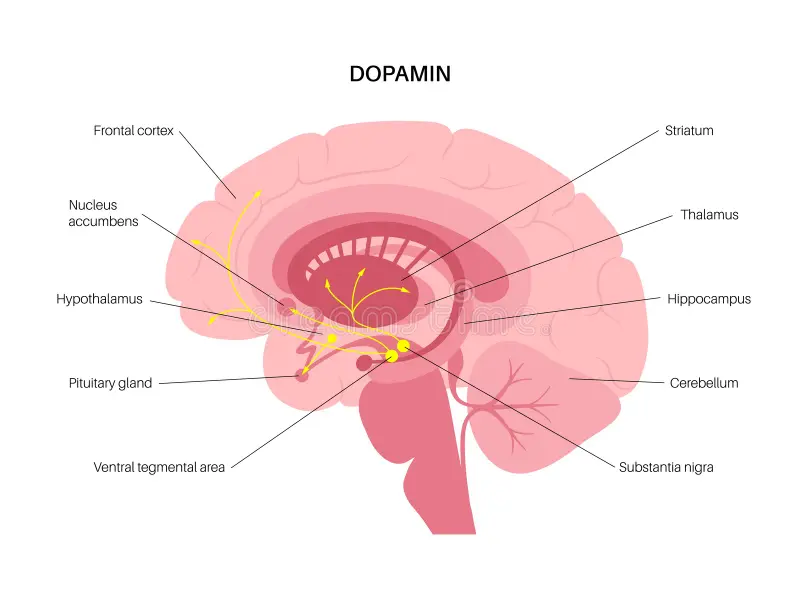
Dopamine is a neurotransmitter (chemical messenger – ناقل عصبي).
It plays an important role in:
- Motivation
- Pleasure
- Mood
- Movement
- Learning
- Attention
Dopamine is what makes you:
- Get out of bed
- Check your phone
- Finish a task
- Chase a goal
But to understand dopamine, we first need to understand neurotransmitters.
What Is a Neurotransmitter?
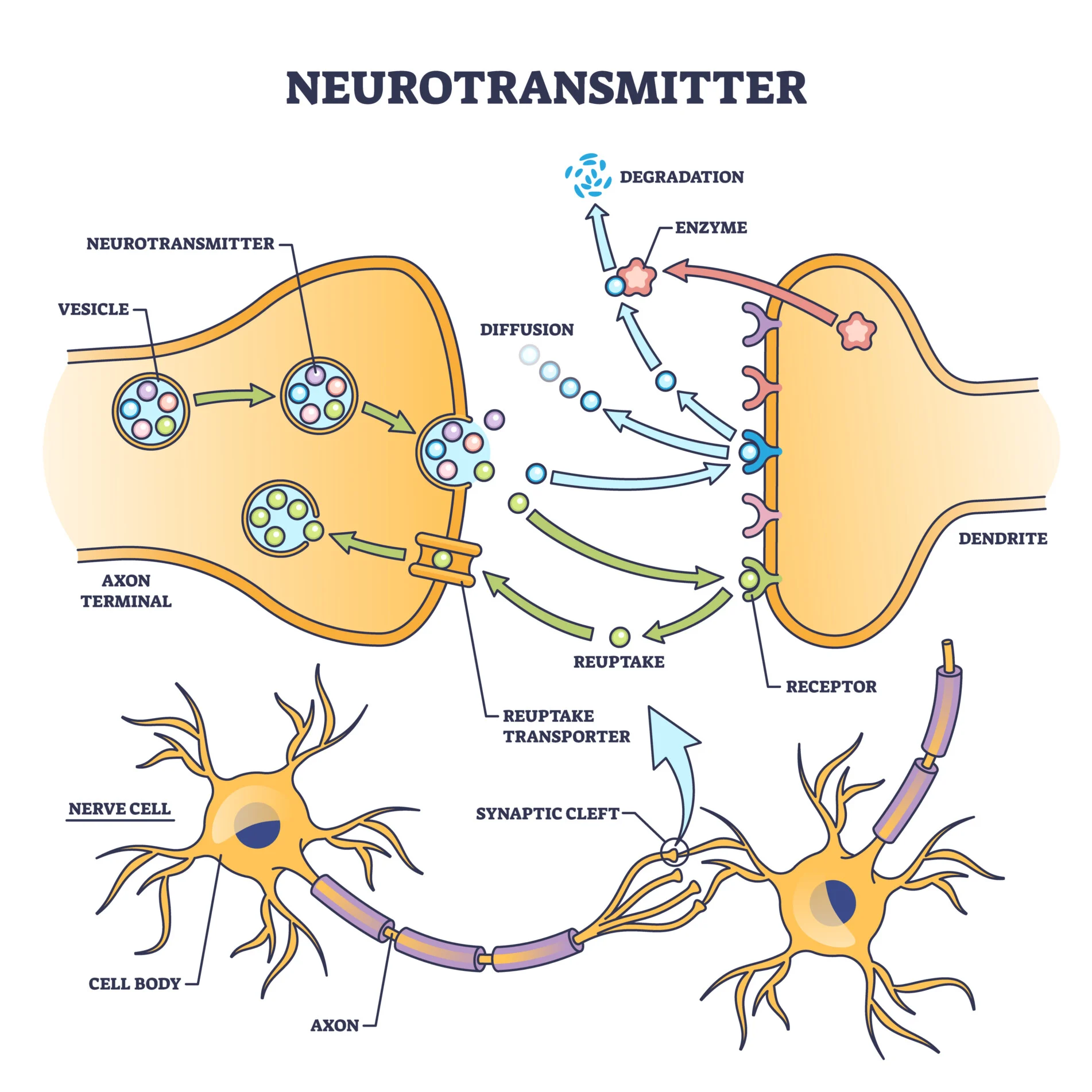
Your brain is made of billions of nerve cells called neurons (خلايا عصبية).
These neurons do not touch each other. To communicate, they send messages using chemicals.
These chemicals are called neurotransmitters (نواقل عصبية).
In simple words:
Neurotransmitters are the messages your brain uses to tell you:
- What to think
- What to feel
- What to do
They control things like:
- Mood
- Motivation
- Memory
- Sleep
- Movement
Examples of neurotransmitters:
- Dopamine
- Serotonin (السيروتونين)
- GABA (غابا)
- Noradrenaline (نورأدرينالين)
Where Does Dopamine Come From?
Dopamine is made inside the brain. It comes from the food we eat.
Here is the process (simplified):
- You eat protein-rich food
- Protein provides an amino acid called tyrosine (تايروسين)
- The brain converts tyrosine into dopamine
Dopamine is not absorbed directly from food. Your body creates it.
How Dopamine Works in the Brain
Dopamine does not move freely like blood.
Inside the brain:
- Dopamine is released from one neuron
- It crosses a tiny gap called a synapse (مشبك عصبي)
- It binds to dopamine receptors (مستقبلات الدوبامين) on the next neuron
- The message is delivered
What Happens When the Message Is Delivered?
When dopamine activates a receptor, the receiving neuron changes its behavior.
It may:
- Become more active
- Become less active
- Change how strongly it responds in the future
This depends on the type of receptor.
The neuron then sends an electrical signal through the brain network.
This creates real effects like:
- "This is important"
- "Pay attention"
- "Remember this"
- "Do this again"
- "Move your body"
This is how motivation, learning, and habits are formed.
Dopamine Hit: What Is It?
A dopamine hit is a short and sudden increase in dopamine.
It happens when:
- You receive good news
- You eat tasty food
- You get a like or a message
- You win something
- You experience something new or exciting
Important point:
Dopamine spikes before the reward, not after.
It is the "something good is coming" signal.
Dopamine Baseline: Your Normal Level
Your dopamine baseline is your normal dopamine level in daily life.
- High baseline → motivation, energy, curiosity
- Low baseline → boredom, low mood, lack of motivation
Your baseline is shaped by:
- Habits
- Lifestyle
- Stress
- Sleep
- Long-term stimulation
Dopamine and Pain: Two Sides of One System
Dopamine and pain are connected.
Key idea:
Every dopamine spike is followed by a drop below baseline.
The brain always tries to return to balance (homeostasis – الاتزان الداخلي).
So:
- Big pleasure → bigger crash
- Frequent dopamine hits → lower baseline over time
This is why:
- Pleasure and pain are linked
- Chasing pleasure can increase suffering
What Happens When Dopamine Levels Drop?
When dopamine stays below baseline, you may feel:
- Sad
- Empty
- Unmotivated
- Irritable
- Tired
- Disconnected
- Unable to enjoy things (anhedonia – فقدان المتعة)
This is not weakness. It is biology.
Dopamine and Addiction
Addiction happens when:
- Dopamine spikes are too frequent
- The brain reduces sensitivity
- Normal life stops feeling rewarding
Common dopamine-heavy addictions:
- Social media
- Pornography
- Junk food
- Drugs
- Gambling
- Video games
What changes in the brain:
- Fewer dopamine receptors
- Lower baseline
- Strong cravings
- Less control
How the Brain Rebalances Dopamine
The brain always tries to return to balance.
It does this by:
- Reducing dopamine release
- Reducing receptor sensitivity
- Increasing the pain response
Rebalancing happens when:
- Stimulation is reduced
- Time passes
- Healthy behaviors are repeated
This process is slow, but very powerful.
Can Dopamine Levels Recover?
Yes — naturally.
The brain recovers through:
- Rest
- Sleep
- Exercise
- Sunlight
- Social connection
- Meaningful effort
- Time away from overstimulation
Key truth:
You don't need more pleasure — you need less overload.
Real-Life Example: A Breakup
Before the Breakup
- Your partner was a major dopamine source
- Messages, touch, shared moments → dopamine hits
- Your brain learned: "This person = reward"
- Your baseline adjusted to that presence
After the Breakup
Suddenly:
- Dopamine source disappears
- Baseline drops
- The brain enters withdrawal (انسحاب)
You may feel:
- Emotional pain
- Obsessive thoughts
- No motivation
- Physical heaviness
- Strong desire to reconnect
This is similar to drug withdrawal.
Why It Hurts So Much
The brain expects dopamine It does not arrive Pain systems activate Stress hormones increase
Your brain is not just sad — it is chemically out of balance.
How Healing Happens
Over time:
- New routines form
- New dopamine sources appear
- Baseline slowly rises
- Pain decreases
- Motivation returns
Helpful behaviors:
- Physical movement
- Avoid checking your ex online
- New goals
- Social support
- Patience
Healing is not forgetting. Healing is rebalancing.
Final Thought
Dopamine is not your enemy. The problem is imbalance, not dopamine itself.
When you understand dopamine, you stop chasing constant pleasure and start rebuilding real motivation.
Resources
For further reading and learning, here are some resources I found helpful: